AERA 2012 Summary and “Overview”

This year, rather than using R to pull the AERA tweets I used Martin Hawksey’s Twitter Archiving Google Spreadsheet TAGS v3.  It was a straight forward set up that produced some nice summaries and rolling updates.  While I think the TAGS v3 utility is excellent for planned events, such as conferences, where hashtags are agreed upon in advance and used with a high frequency (1000’s of tweets rather than a couple hundred), I still like using R for hashtags that are used more informally or periodically.

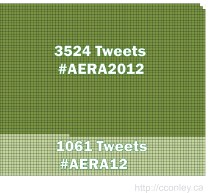
This year in Vancouver two hashtags were used:

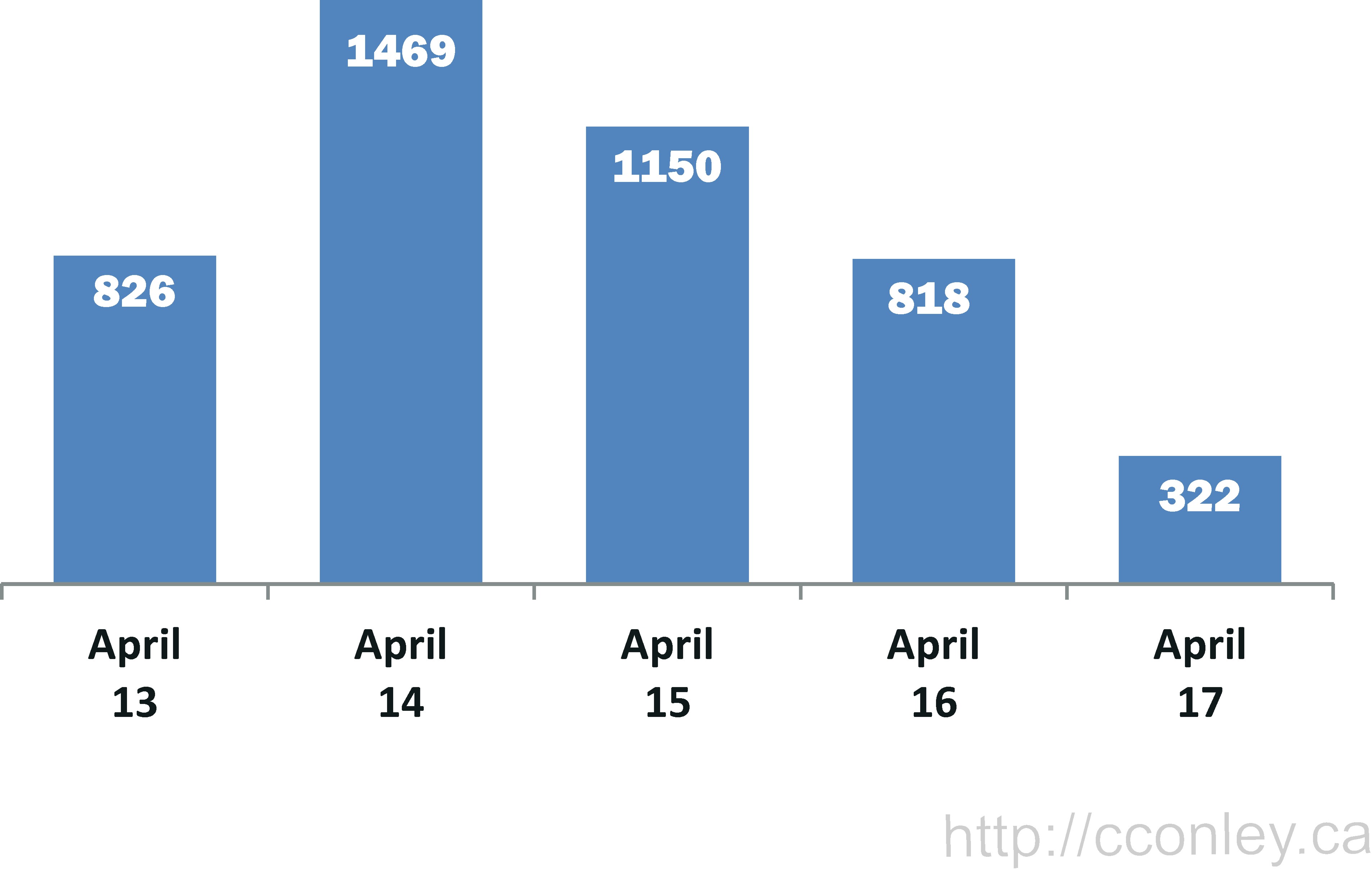
  • 4585 tweets were shared with the #AERA2012 or #AERA12 hashtags.
  • 619 tweets that were questions
  • 77 tweeters included their geolocation
  • the majority of tweets were on Saturday and Sunday

The top-tweeters of 2012 were:

  • @lizjmeyer, (128)
  • @eritskes, (125)
  • @symphily, (123)
  • @saragoldrickrab, (115)
  • @raq_steady, (106)

Of the 4585 tweets, 1122 were retweets.  The top 10 were:

  • RT @ileducprof: White scholars don’t cite scholars of color. ~Richard Delgado #BlackEdu #AERA2012, (18)
  • RT @ubcnews: Missing Jo-Ann Archibald’s lecture on ‘Transforming Indigenous Education’ at #AERA2012? Check out this video: http://t.co/Y2IQhNiZ #UBC, (17)
  • RT @ConstanceIloh: Out of the 63,712 doctoral degrees conferred in 2007-2008; only 4% were awarded to black females #AERA2012, (15)
  • RT @chrisgreenhow: Good read this week re:Twitter in higher ed @globalchronicle http://t.co/GUv2aveD #AERA2012 #MSUatAERA #cjsm, (13)
  • RT @cueponcaxochitl: How do you cite a tweet in an MLA-style academic paper? – how about APA? http://t.co/oVkjnEXm #AERA #AERA2012 #AERA12, (13)
  • RT @symphily: Scholar scheduled to present at #AERA / #AERA2012 denied entry to Canada – http://t.co/dp6zJlqd [ #Canada #CdnEd #BCed #loveHE #highered ], (13)
  • RT @davidwees: Education innovation: bring together 13,000 researchers on education and let a few hundred of them speak. #AERA2012 #ISTE12, (12)
  • RT @markhelmsing: #AERA2012 If you ask a question during a Q&A, don’t filibuster. State question and sit down. That’s why we have discussants. Not your paper., (11)
  • RT @ileducprof: Teacher quality is most important to high poverty and high minority schools. ~Dr. William Trent #AERA2012 #BlackEdu, (10)
  • RT @jonbecker: K-12 edutweeps might want to track the #AERA2012 hashtag throughout the weekend. I’d be curious to know if any of it is useful to y’all., (10)

The 14 most frequently shared links were:

If you are interested in exploring the AERA tweets in more depth, feel free to use this cleaned spreadsheet and let me know how you are using the data and what you find.

For a qualitative look at the AERA tweets, Bodong Chen shared this post using “Overview”, a prototype designed for the exploration of trends and patterns within large document archives (think wikileaks). One of the nice aspects of this utility (and wonderfully reviewed by Bodong) is Overview’s visual approach for clustering .  I find the visual presentation of clusters in relation to frequencies a much more enjoyable approach than the typical qualitative processes.  As Bodong observes, Overview is a great way to explore a large set of tweets.  One of the challenges of using this with twitter archives is that spelling variations (abbreviations and creative spellings commonly found in tweets to maximize content) is likely to confound the stemming process.  However, for open-ended survey responses I have found the clustering to be more straight forward and useful.  While I tend to use R for these tasks, Overview is a great utility to include in your toolkit.

For those interested, Overview is available on Git and requires both Ruby and Java.

*Note: the structure of the tweets in the Overview screen shot (above varies from Bodong’s because my archive included both the #AERA2012 and #AERA12 hashtags.

Posted in Top-TIER | 2 Comments

Ontario Education Research at AERA 2012

Today is the official start to the 2012  Annual Meeting of the American Educational Research Association (AERA).  Over the next 5 days researchers from around the world will be sharing their work and networking.  If, like me, you are unable to attend in person, you can participate through twitter using the hashtag #AERA2012

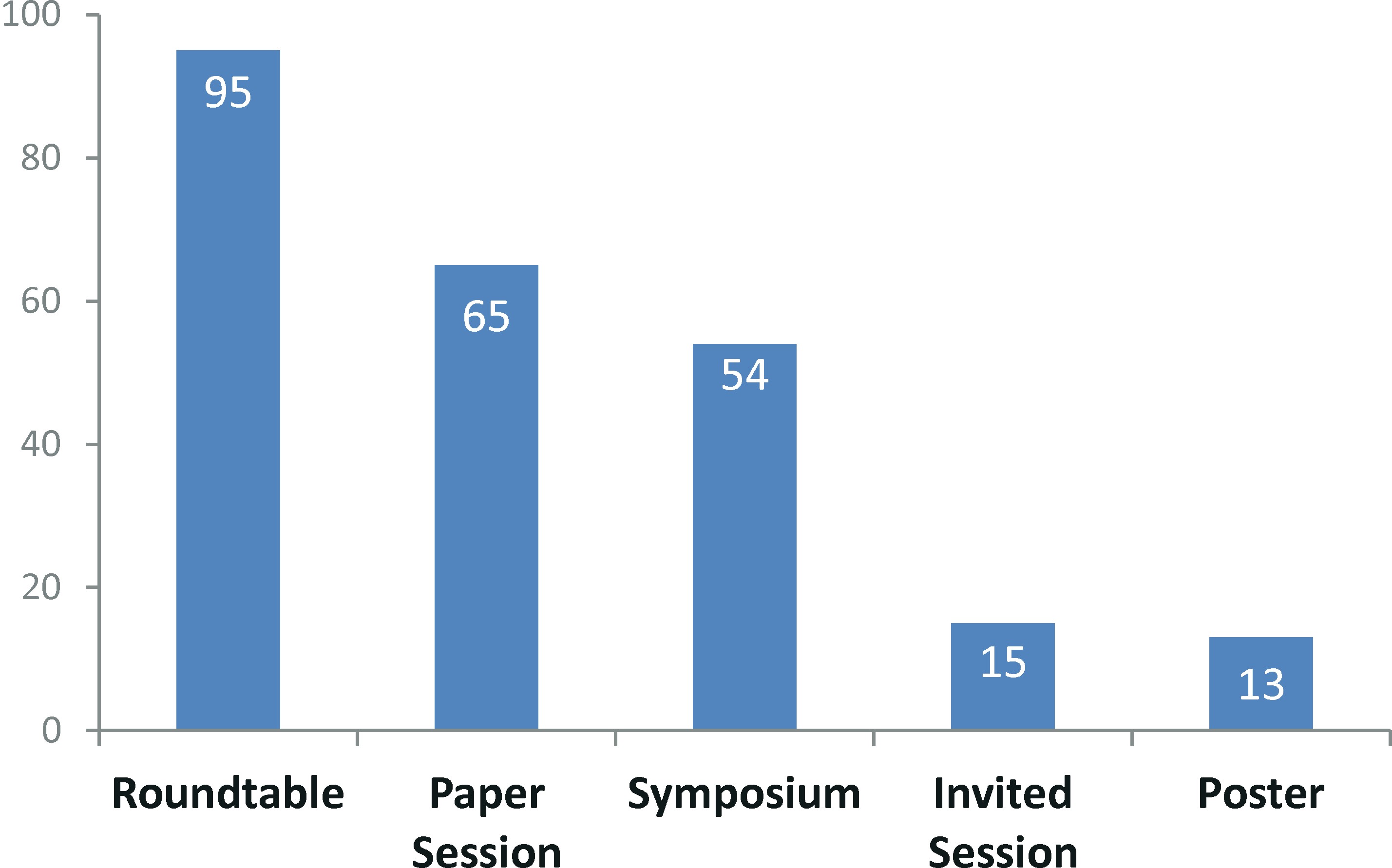
Using the AERA Program pdf I created a spreadsheet containing a list of the 2012 AERA research that will be presented by Ontario Education Researchers.  Ontario is well represented once again (see last year’s post on Ontario Education Research at AERA) at AERA with 261 presentations by Ontario Researchers.  Of those presentations, 251 presentations include Ontario University researchers, 8 presentations include Ontario School Board researchers and 8 presentations by Ontario Ministry of Education researchers.

Although the majority of presentations are roundtables, paper sessions, symposia, invited sessions and poster sessions, Ontario researchers will also be featured in fireside chats, presidential sessions, business meetings and demonstrations/performances.

This year the most common themes for presentation are:

  • Curriculum Studies (25)
  • Learning and Instruction (20)
  • Administration Organization & Leadership (17)
  • Social Context of Education (15)
  • Teaching and Teacher Education (12)
  • Indigenous Peoples of the Americas (10)
  • Canadian Society for the Study of Education (9)

Although I am unable to attend, I have set up an archive to capture the tweets connected to #AERA2012 and will provide a few summaries of the activity and resources that are shared over the next few days.

Good luck to all the presenters!

Posted in Top-TIER | 1 Comment

It Is All Up-Hill For This Data Vis

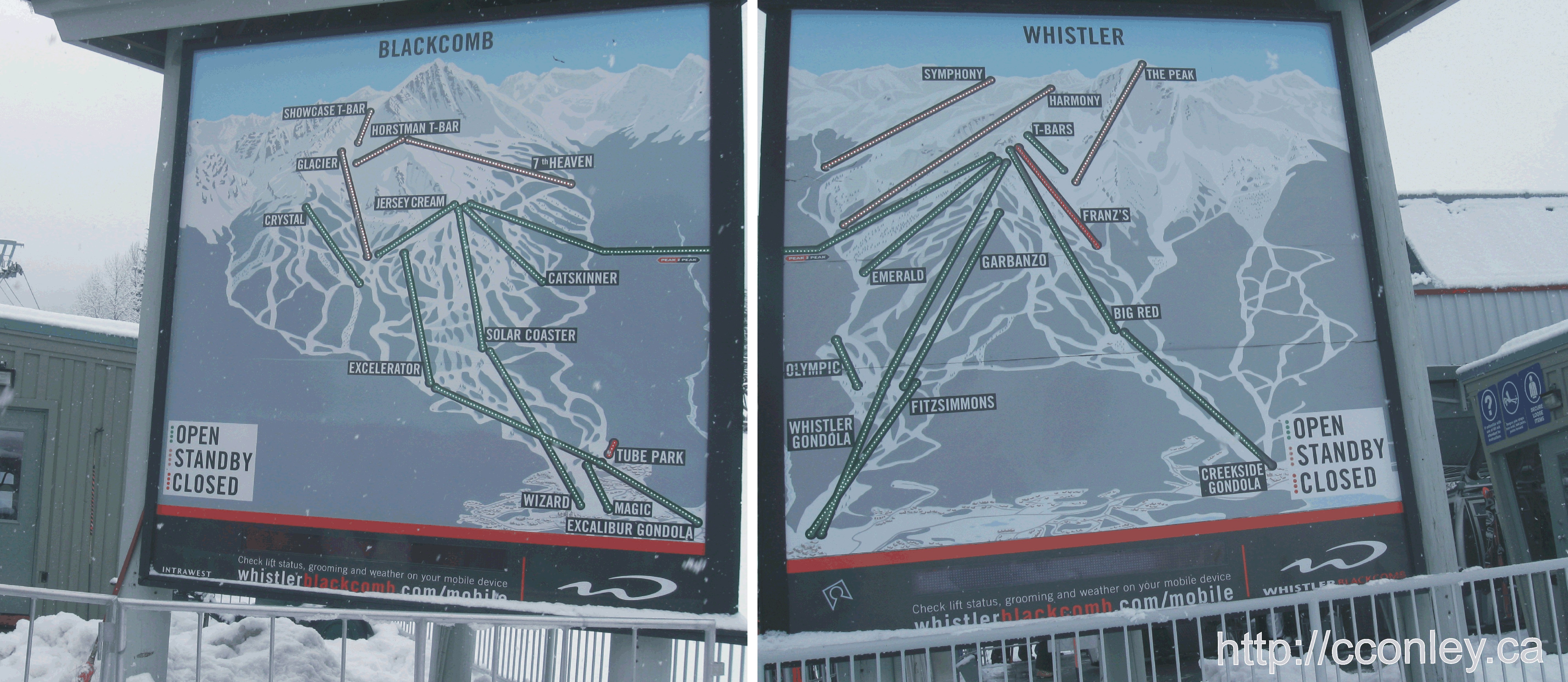
Although snow conditions are usually the first thing skiers ask about, by the time you get to the base of a mountain (and even before you put your gear on) it is important to know which chair lifts are running and which ones are closed.  In many instances the communication of this kind of information is handled with lists of the lifts and trails posted on whiteboards, websites and shared on local radio and television sports reports.  However, using a map and a string of lights, the Whistler Blackcomb resort is using a creative and effective approach to update the current status of lifts and mountain access.

Like a traffic light the map uses red for “closed”, green for “open” and yellow for “standby” as a physical visualization.  Maps of ski trails have long been a staple of ski resorts so it was interesting to see it adapted to communicate the status of chair lifts.

Posted in Every Day Data Vis | Tagged | 1 Comment

Research Transparency and Accountability – New Collaborations?

The discussion of a new tri-council policy framework on February 16th , previewed recommendations that have evolved over two years of deliberation and planning to address issues of research transparency and accountability.  During a research integrity workshop session of the American Association for the Advancement of Science’s annual meeting, it was proposed that the Canadian Institutes of Health Research, the Natural Sciences and Engineering Research Council and the Social Sciences and Humanities Research Council be given the power (and responsibility) to release the names of researchers and their organizations with a description of ethical breaches such as misappropriation of funds, plagiarism, falsification of data and ghostwriting.

Given the nature of privacy laws, this new ability to publish names and contexts will become possible with the inclusion of a waiver (presumably as part of the application process) which would acknowledge that investigators forfeit their right to “polite discretion” in the event of a “grave transgression”.  Assuming responsibility for this new approach will be the “Panel on Responsible Conduct of Research” which has replaced the 1994 tri-council research integrity statement.

Another interesting aspect of this framework is the proposal of a new requirement to include at least one member on the research team who is not affiliated with the University conducting the research.  Although this criteria was included to address concerns of University self-interest and protection of institutional reputations, it also underscores the value of Universities and School Boards (and their researchers) collaborating in education research.  As both the Association of Educational Researcher of Ontario (AERO) and the Ontario Education Research Panel (OERP) continue to support Ontario researchers, this new framework provides additional motivation and opportunities to leverage existing research capacities as well as explore new possibilities.

For more information on the details discussed at this workshop, click here to read a  detailed article by Sabrina Doyle in the current issue (March, 2012) of the Canadian Medical Association Journal (CMAJ).

Posted in Research Resources | Tagged , , | Leave a comment

Ontario Education Research in 140 Characters – OERS 2012

The seventh annual Ontario Education Research Symposium concluded today.  A new approach was employed this year to collect feedback in real time which was compiled and included as updates throughout the symposium.  Attendees were invited to send text messages when to report back when a new network connection was made or when a new research idea was generated. Although Twitter has been used by attendees for many of the past symposia, this was the first year that tweeting was formally recognized, recommended and tracked by the organizers.

The wordcloud above was created with the tweets from the #OERS12 hashtag using tagxedo, an online application that allows you to create word clouds that conform to shapes and images of your selection.

To take a look at the activity of #OERS12 I used R to compile all of the tweets that were sent over the past few days.  Once compiled, I cleaned the formatting and added some basic coding.  If you would like to take a look at these tweets, I have made them available here as a Google document.  Let me know if you are using the file for additional analysis, I’m interested in seeing where people take it.

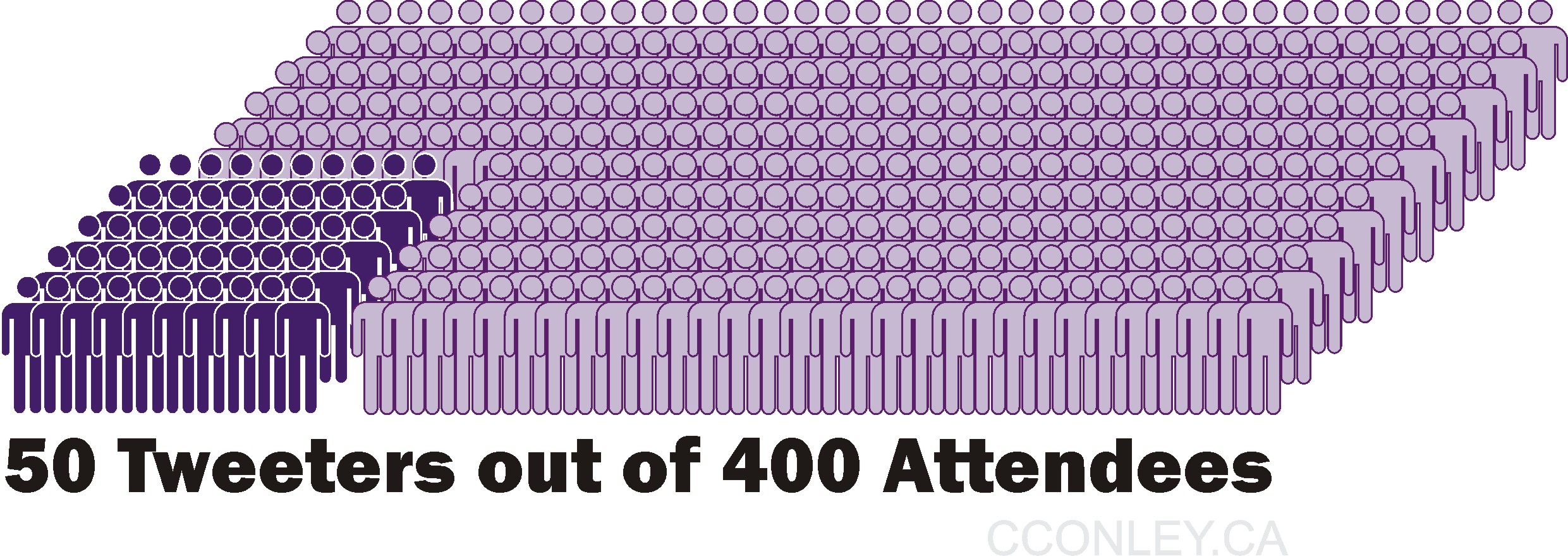
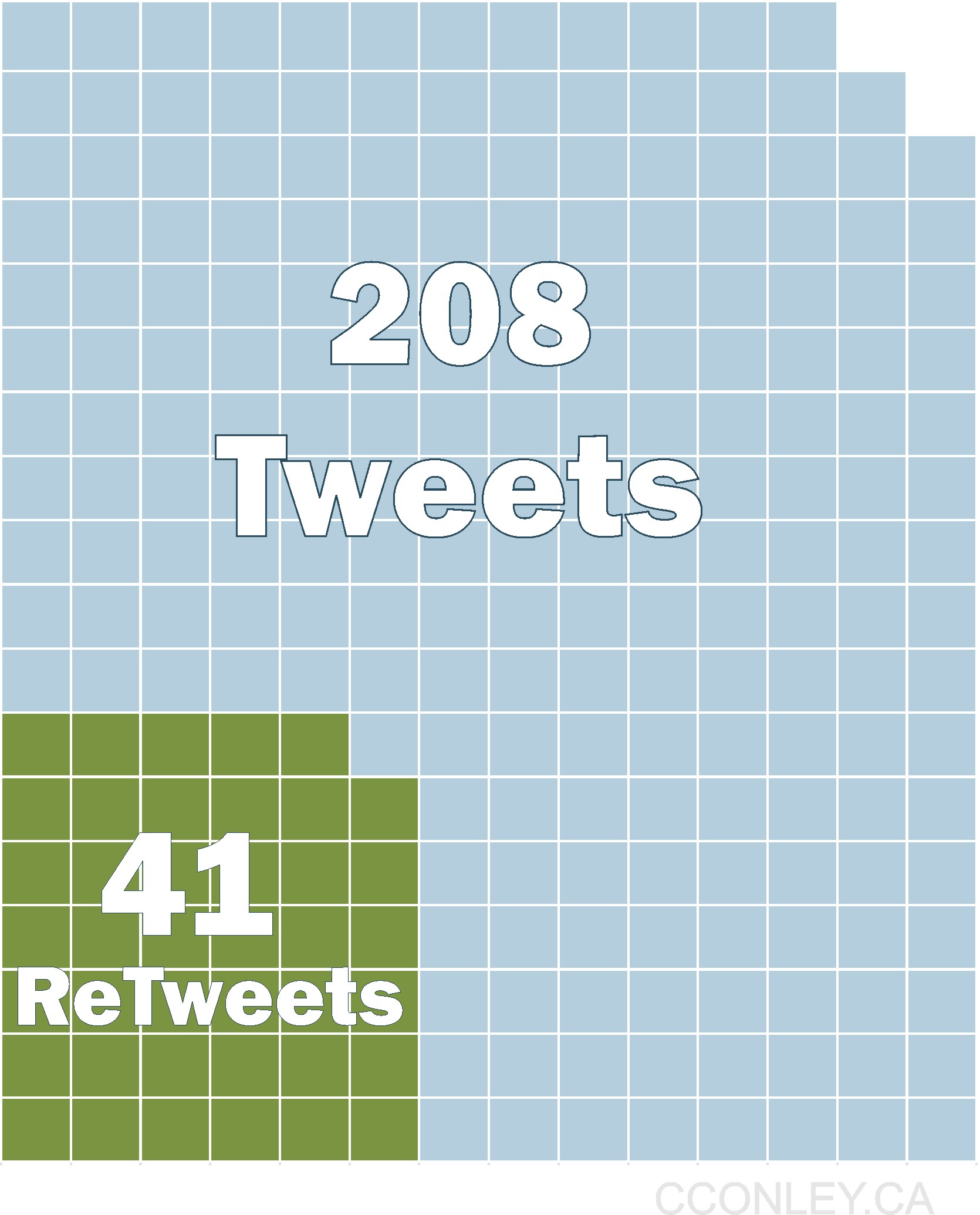
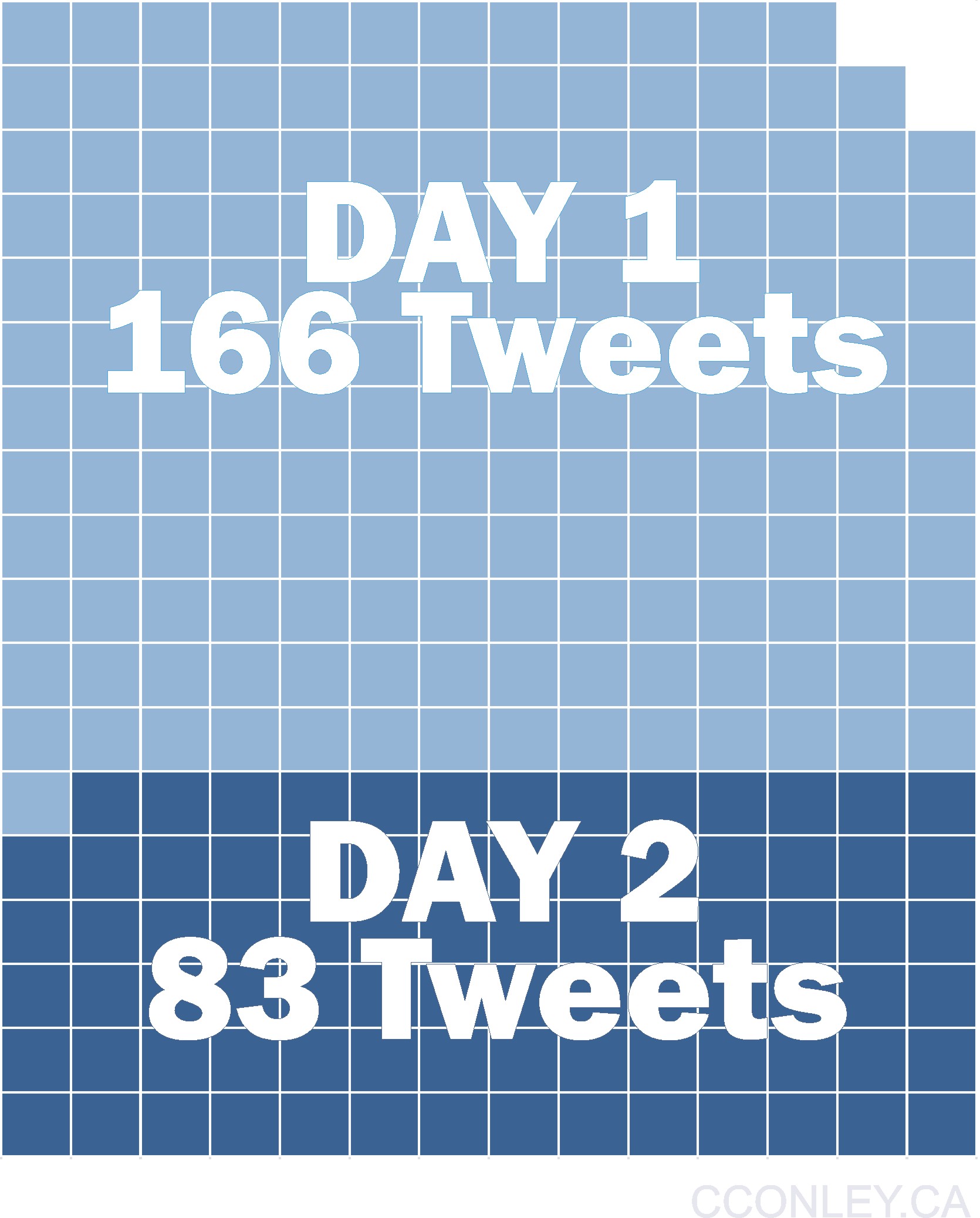
Of the roughly 400 registered attendees, 50 took up the cause and shared almost 250 tweets. 

Of those tweets, 20% were re-tweets (messages that are reposted by other users).

The majority of the tweets were written on the first day of the symposium.

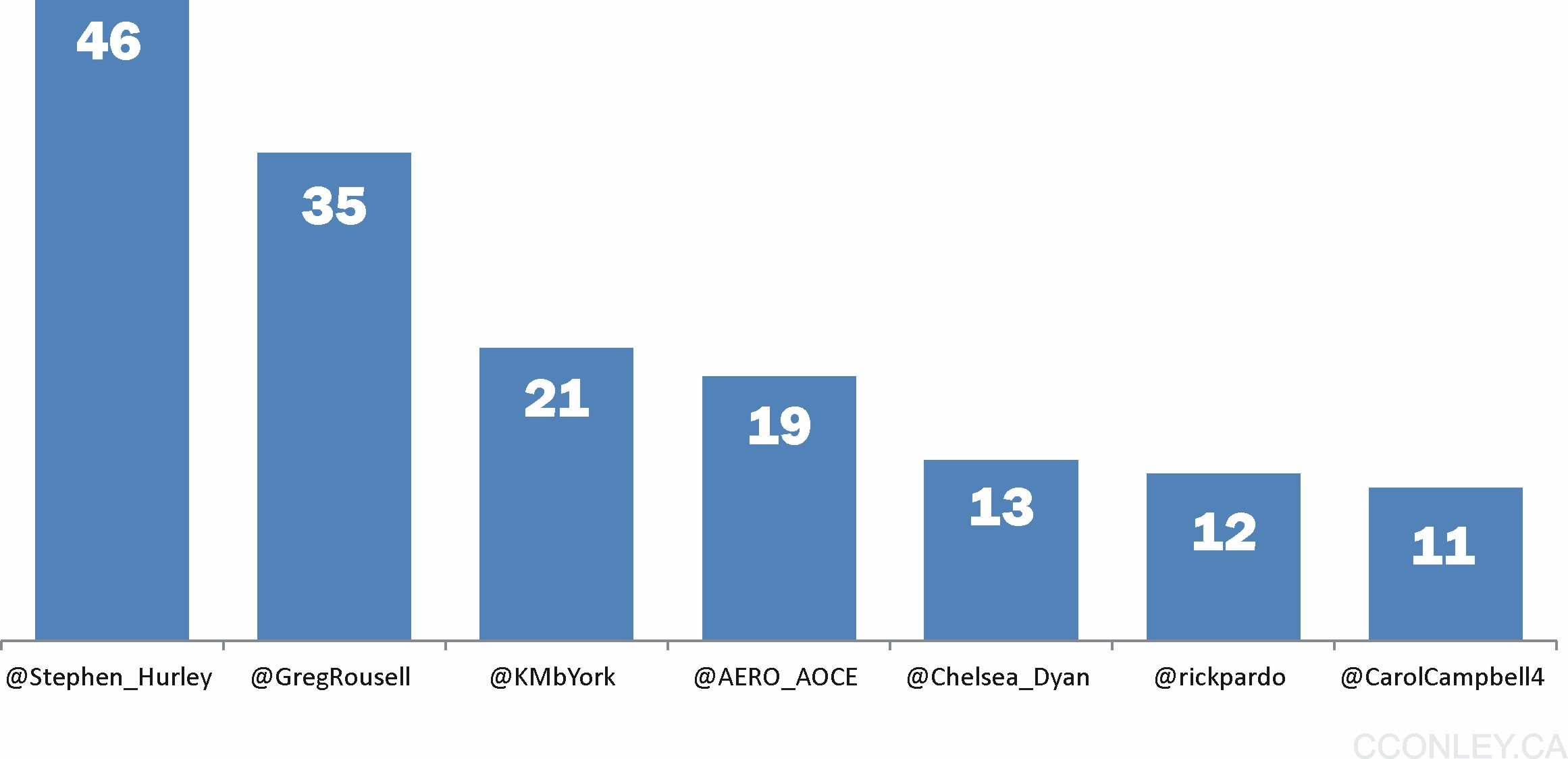
Over the 2 days of the symposium there were 50 attendees that wrote tweets.  This is an impressive level of participation particularly when you consider that wifi was unavailable which means that only those with mobile devices and data plans could participate in real time in the breakout rooms.  I had intended to engage in some replay-tweeting (post-tweets?) where I would tweet my notes from workshops and presentations later in the day.  However, there were so many great conversations and interesting presentations to attend I wasn’t able to find the time to slip away and tweet from the lobby.  Of the 50 symposium tweeters, almost two thirds of the comments (63%) were sent from 7 very active attendees:It will be interesting to see how long the #OERS12 hashtag persists as people return to their organizations and reflect on the presentations and conversations of the past few days.

Finally, thanks to the OERS organizers, all the people I had an opportunity to meet and speak with, and for the opportunity to share on data visualization and our Knowledge Network for Applied Education Research (KNAER) project.  A link to our data visualization exemplars page is available here.

UPDATE:

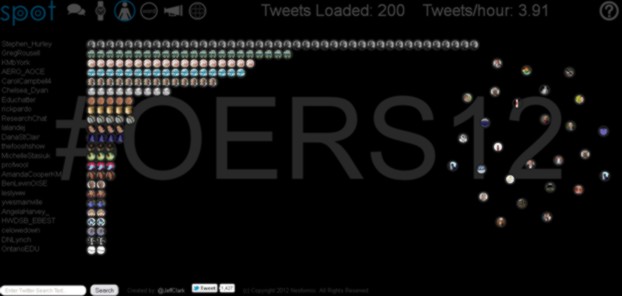
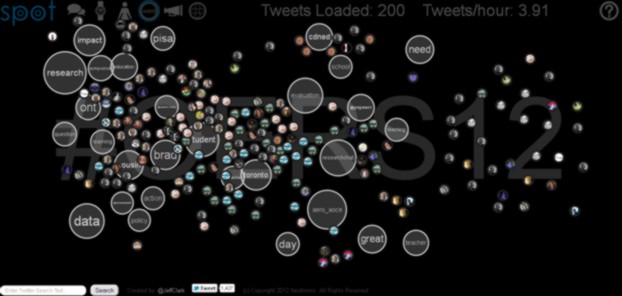
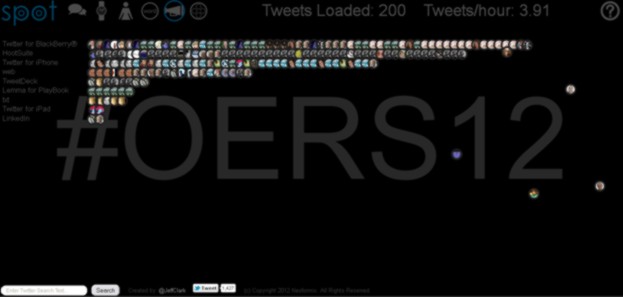
In the comments section, Jeff Clarke shared his Neoformix utility which explores twitter visually by creating frequency charts using the avatars of tweeters.  It is an interesting application that can be used with any set of keywords in twitter. I wanted to move it up into the post so I could include some screen shots. Since tweets are time sensitive, the number of tweets available to graph diminishes over time.  The following screen shots were taken on Friday February 24th of the #OERS12 hashtag in neoformix (click on images to enlarge).

#OERS12 by user:

#OERS12 by date:

#OERS12 by keyword:

#OERS12 by twitter client:It is interesting to see how popular Blackberry and Hootsuite were at the symposium and how few tweets came through LinkedIn and Tweetdeck.

Posted in Data Visualization, Top-TIER | Tagged , , , , | 4 Comments